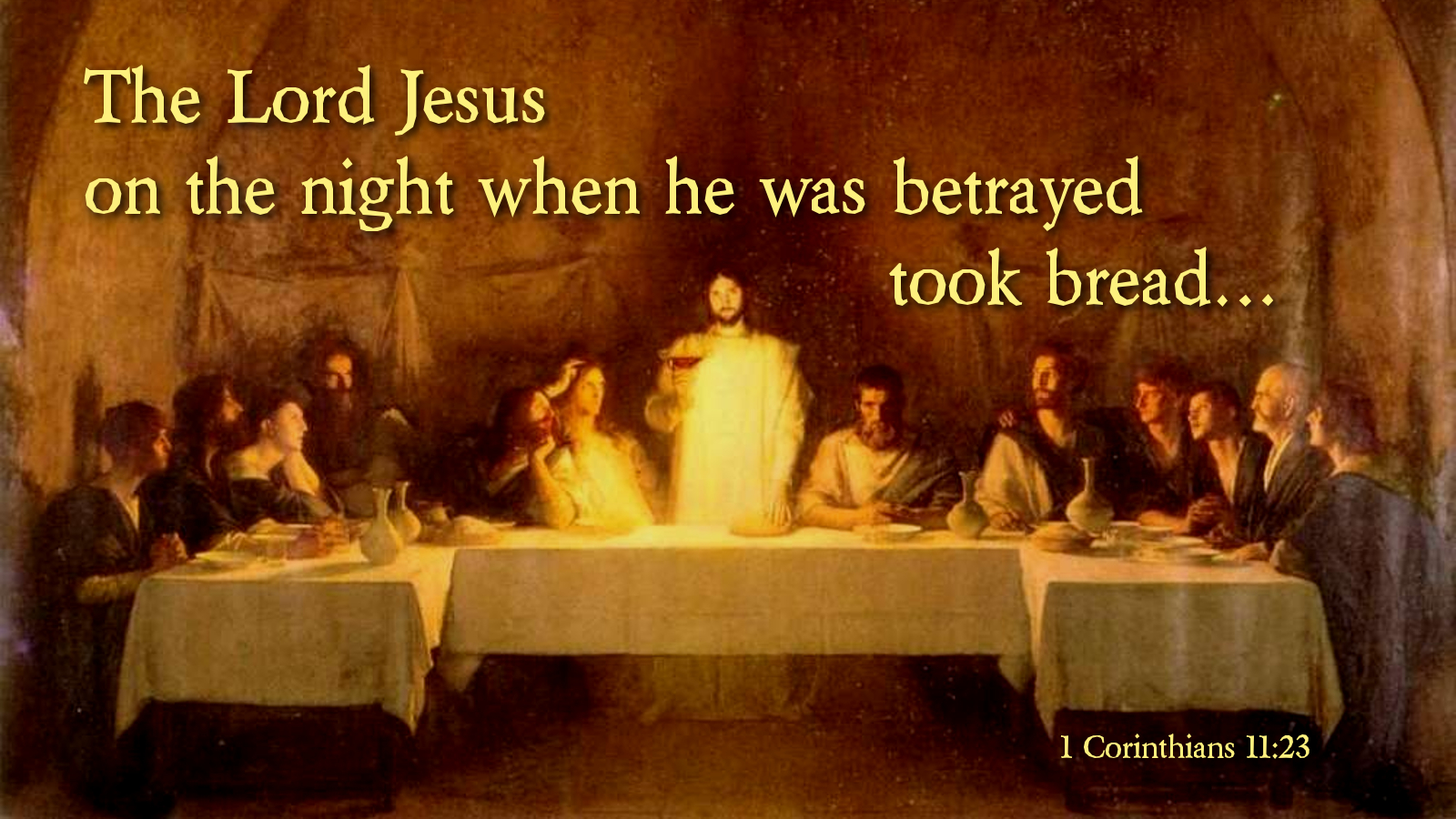
The upper room

1 Cor 11_23

John 13:1-38, 1 Corinthians 11:23-26

If we were in the upper room the night Jesus was handed over, we would have been in the same boat as the apostles. There is no way they could have imagined the unfolding of events that night. Certainly something was different. Jesus’ words and actions seem so much more intimate and, well, final. He said to his disciples, one would betray him, another would deny him, and as he departed, they would not be able to go with him, but he would come again to take them where he was going.

On that night, we would have been as confused as the rest. Thankfully, we stand on the other side of the empty tomb. God’s people today know that even as Jesus was betrayed into the hands that would kill him, Jesus himself laid down his life for the sake of humanity. Even as he was buried, the grave could not hold him. Jesus’ death put sin to death, his resurrection opened the gates of eternal life for all who believe.

Once more, on this Maundy Thursday, we hear anew the account of the upper room, Jesus with his disciples on the night he was betrayed. We mark this time as pastors wash the feet of lay persons, children receive their first Holy Communion, and altars are stripped of the symbols and appointments that point to Christ our Lord. As we do these things, we are once again witnesses to the events of the upper room.

We must face the betrayal of our sin. Christians must admit that because of our disobedience we have grieved God’s heart, turned away from his goodness and lived for ourselves. Yet, as Christ assured those in the upper room, he assures us as well. He offers his very body and blood, given and shed for the sake of those whom he came to save.

Bless us and keep us O Lord, that we may perfectly love you and worthily magnify your holy name. Amen.


Original image

Posted in Faith, Worship | Tagged , , , , , , | Comments Off on The upper room

By what authority?

Mark 11_28

Mark 11:27-33

The day after Jesus drove the merchants and traders out of the temple, the chief priests, scribes and elders of the temple put Jesus on the spot, questioning his authority to do such things. They expected a direct answer. Knowing the hearts of those who would accuse him, Jesus turned their question around on those who abused the authority they’ve been given by God, replacing it with a perceived authority all their own.

All too often, the church faces the dilemma of authority. Certainly, God calls leaders for his people and gives them authority to act on his behalf. Yet, we have seen it happen time and again that sin creeps into the life of the church and challenges what God has set in place. Both clergy and lay leaders are susceptible and must remain open to the guidance of the Holy Spirit. We need to recognize the difference between what is real and what is perceived.

Authority that is exercised in the truth of the gospel is revealed as a reflection of the life and light of Jesus Christ. The chief commandments to love God and love neighbor become the guiding factors for decisions and activities. Perceived authority, or authority that is abused, cannot stand in the light of truth. Its fruit is conflict, division and brokenness.

Jesus is the model for faithful leadership; the leader’s authority is found in him. When sin and brokenness creep into the life of the church, faithful leaders recognize such issues, confronting them in the way Jesus taught. In his name, we speak the truth in love and forgive the sins of others as God forgives us. We recognize our own faults and seek to reconcile all involved through Christ Jesus our Lord.

Merciful God, guide us by the example of your Son; make us willing to bow to your authority. Amen.

Original image

Posted in Christian Living, Faith | Tagged , , , , , | Comments Off on By what authority?

Hosanna!

Luke 19_40

Luke 19:29-48

The Passion of our Lord, as it is read to the people of God, brings with it a range of emotions. In the early moments of the reading, crowds of people line the road that leads into the city. Shouts of “Hosanna,” combined with waving palm branches signal to those who have waited for so long that their King is coming to them. Most are joyous, but for the Chief Priests, scribes and Pharisees, there seems little to celebrate.

The spectacle is too much; they want it shut down immediately. Instructions are given to Jesus that he quiet the crowds before it get too far out of hand. Yet Jesus assures them that, “if these were silent, the very stones would cry out.” Luke 19:40

The powers that defy God continue their attempt to silence the disciples of our Lord Jesus. Public prayer, posting of the Ten Commandments, and many seasonal Christian displays are strongly discouraged and at times even forbidden. It is like the Pharisees demanding the followers of Christ to refrain from praising his name and sharing is Word. Yet, even as the crowds of Palm Sunday sang out, the Church also sings “Hosanna.”

As we enter this Holy Week, consider how you might share your faith with those who do not know Christ. Recognize those times when you might encourage a believer that is experiencing doubt. And pray for the Church, that as we prepare for the most holy of days, we may proclaim with a clear voice, the victory of Christ over sin and the power of the grave.

O Lord, strengthen me in faith, that I may proclaim to all your mercy and grace through your Son Jesus Christ. Amen.

Original image

Posted in Devotions, Evangelism | Tagged , , , , , , , | Comments Off on Hosanna!

Our thankful response

Hebrews 9_1

Hebrews 9:1-14

The Lutheran Church, like many others, is one of tradition. If you doubt this, ask a member of any congregation why it is they do something in a particular way. You will likely be met with the response, “This is how we have always done it.” Suggest making subtle changes such as lighting candles in a different order and you will hear the familiar refrain, “We have never done it that way.” The traditions within our congregations are endearing, comfortable and seem unchanging. However, as beloved as they may be, our traditions and rituals serve no purpose towards attaining salvation.

From the beginning, the rituals of the temple were such that everything was done in strict order. The author of Hebrews reminds the Church that before the death and resurrection of Christ, worship was done in a particular way. The observances of the priests made sacrificial offerings for the sins of people, yet the blood of animals could not atone to for human disobedience. Simply put, their rituals could not bring about salvation.

Since humanity’s fall, God’s plan for redeeming his people from sin, death and the power of the devil has always been through the sacrifice of his only Son Jesus Christ. No ritual of man can bring about the total forgiveness of sin that comes through Jesus’ victory of the cross. And so our worship is made in thankful response to all God accomplishes through his only begotten Son, our great High Priest.

We worship you, Lord Jesus, for you have saved your people and opened the gates of heaven for all who believe in you. Amen.

Original image

Posted in Worship | Tagged , , , , , | Comments Off on Our thankful response

Welcome to God’s table

1 Corinthians 11_24(1)

1 Corinthians 11:23-34

Three young men, boys really, but mature for their age. These three each expressed a desire to know more about the Sacrament of the Altar, although that is not what they called it. They wanted to know why others who are older than them receive the bread and the wine yet they could not. It was a good question, one this pastor was waiting to hear. And so the conversation began.

It wasn’t long ago that I wrote about a child receiving her first communion. Here again, the process repeats itself for the sake of others who come to the table in need of grace. God so freely imparts his love and forgiveness upon those who make the confession that Jesus Christ is Lord. God so generously feeds those who hunger for his righteousness and pours out his cup of blessing for those thirsty for redemption. Christ’s body and blood, given by our Lord’s command under the elements of bread and wine, this is the feast of victory for our God, the feast prepared for you.

Three young men, these boys, will each have the bread of life placed within their hands today. They come to the table with their questions answered. That which they desired is theirs, for in the receiving this bread and wine they realize the benefits of this meal, given and shed for you.

Holy God, we thank you for the gift of faith, that we may receive our Lord Jesus with joyful hearts. Amen.

Original image

Posted in Faith, Worship | Tagged , , , , , , | Comments Off on Welcome to God’s table

Make no distinctions

James 2_1

James 2:1-13

The hypothetical situation lifted up by James, that of two men from widely differing circumstances coming into the assembly, is something that happens often in the life of the Church. People from all walks of life, rich and poor, young and old, abled or disabled, all need the presence of Christ in their lives and depend upon his mercy and grace. Yet, because of sin, the degree of welcome is not always equal. James exhorts the people of God to show no partiality, for partiality and favor toward one group leads to judgement and neglect of another.

So many congregations are gifted in the ministry of welcoming the stranger. Such families of faith have keen insight as to the needs of their neighbors. Mission minded congregations listen, hear and respond to Jesus’ mandate to go into the world in love and service to all nations. So with regards to the teaching of James, how might congregations that struggle with the ministry of welcome begin to turn away from making distinctions and hold the faith? The answer is love.

Our Lord Jesus says that those who love him will keep his commandments, the greatest of which are to love God and love neighbor. It is no secret that churches exist for the sake of non-members. The lost and lonely, homeless and helpless, the poor and hungry all depend on God’s people to extend to them the love of God in Christ. The sick and lame benefit greatly from the prayers of the righteous, especially as they find the church open and accessible to their needs.

People of God, show no partiality.  For God’s mercy and grace is meant for all people. Make no distinctions within or outside the church, for God calls all people to be rich in faith, that they may become heirs to his kingdom forever.

O Lord God, help us to overcome the distinctions and divisions between us, that we may live in faith and love. Amen.

Original image

Posted in Evangelism | Tagged , , , , , , , | Comments Off on Make no distinctions

Proclaim the gospel

Matthew 2_10

Matthew 2:1-12

The Christian mission is to preach the gospel throughout the earth so all people might realize God’s grace. It is a daunting task, to preach to the whole world, but God’s people must be diligent, for we never know who is listening.

When the time was right, God revealed his plan for salvation; the incarnation of his Word, who would dwell with humanity and save people from their sin. While angels announced the Christ child’s birth to shepherds, Magi were gazing at the stars in the night time sky. These magi did not know God; they may or may not have heard the voice of the prophets. Yet, they were listening and looking toward heaven when God revealed to them the light of Christ. By the light of a star, it was revealed that one has been born King of kings.

As we proclaim Christ, we do not always know who is listening. As we show mercy and love to our neighbor, we do not always know who takes notice. But with the power of the gospel, the Holy Spirit works in the hearts and minds of those who are watching and waiting, that they may follow and believe.

Shine you light, O Lord, that all may see and follow. Amen.

Original image

Posted in Evangelism | Tagged , , , , , , | Comments Off on Proclaim the gospel

Render to God

mark-12_17

Mark 12:13-17

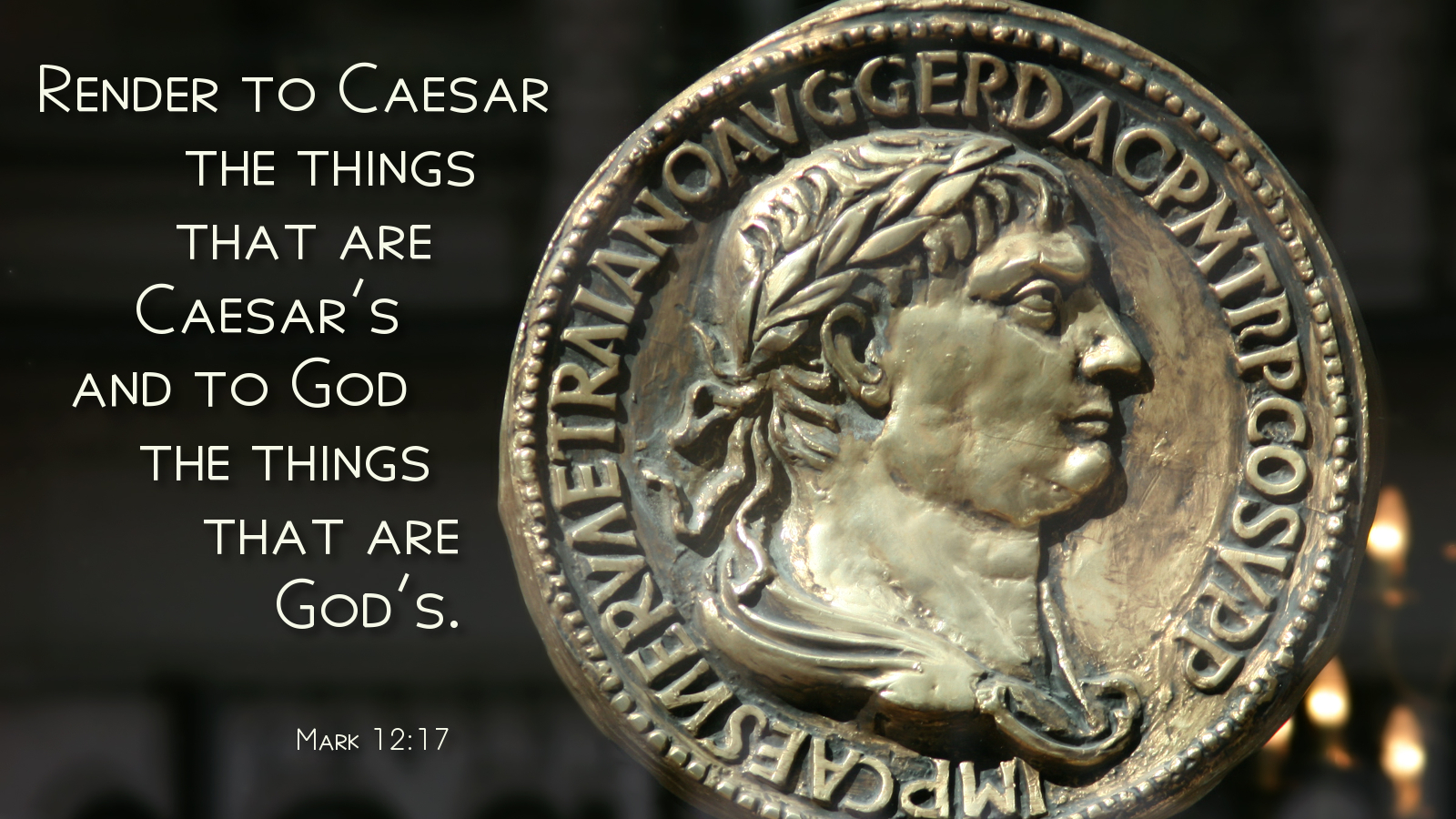
The Pharisees and Herodians were out to set a snare for Jesus; they wanted a way to charge and arrest him. In previous attempts, their plots could not stand in the light of God’s truth. With this latest trap, they tried to confront Jesus with another question with two seemingly wrong answers; “Is it lawful to pay taxes to Caesar?” If Jesus answered yes, they would have him on charges of idolatry, for the coin bore the image of the emperor. If he answered no, the Romans would have a charge of disobedience against him. With this question, their trap was set; all they needed to do was await Jesus’ answer.

Once again, the attempt to use Jesus’ words against him backfires. The Pharisees’ question suggests there are things that belong to this world and things that belong to God. On the surface, Jesus’ answer seems to validate such a position. “Render to Caesar the things that are Caesar’s, and to God the things that are God’s.” (Mark 12:17) But it isn’t long before the Pharisees and Herodians understand they are caught in their own trap. If they are to respond to Jesus, they must explain their reason for paying the tax all along.

The church today often falls into this same trap. Bring this text up within a meeting or Bible study and almost immediately people will say everything belongs to God, even our money. They, of course would be correct. But it would not be long before the discussion falls into the realm of a two kingdom theory; some things belong to the world, some things to God. Others make statements concerning the church must be run like a business, or we need to be careful not to spend so much of our money. Of course, these are faulty beliefs; the trap is sprung and we are snared.

The power of money is deceptive and deadly. Money buys material goods, material goods provide personal comfort, personal comfort leads us to a false notion that we are in control of our lives. The more goods we have, the more we feel we need. Luxuries become necessities; extravagance becomes essential. Even worse, the more we have, the more we feel we deserve, when in truth, because of our sin the only thing we deserve is death. Thankfully, the power of God’s love is stronger. Jesus says, “Render to Caesar the things that are Caesar’s, and to God the things that are God’s.” All we have, even our very lives belong to God. Yet our Father provides all we need for life. As we render taxes and other payments, we do so understanding the authority and responsibility of the institutions also come from God.

O Lord, our provider, we thank you for your many gifts, especially the gift of your grace through Jesus Christ our Lord. Amen.

Posted in Discipleship | Tagged , , , , , | Comments Off on Render to God

The power to preach

1 Thes 1_8

1 Thessalonians 1:1-10

When Paul arrived in Thessalonica, most of the citizens had not yet heard of Jesus. Paul’s message was unlike any other they heard before.  Some might have thought him crazy to believe so earnestly a story of saving grace through the merits of a man once crucified, dead, but alive again. Yet, a great number of people in Thessalonica believed. They were gripped by the power of the Holy Spirit, and in their hearing the gospel, they came to great faith.

So what does this have to say to the Church today? Well, first of all, it reminds us that we have a message worth sharing. God does not expect his people to keep the good news of Christ to themselves. Such truth is meant for everyone throughout the globe. Just as all are sinners, all need to hear the message of mercy and grace through Christ.

Secondly, it means that we are to be willing, as Paul was willing, to go to places where the gospel is not widely known. We never know who might respond to our effort of evangelism. Nor can we predict what their response might be. Yet, by the power of the Holy Spirit, the good news will bring people to faith; the message is that good.

Paul continued to preach the gospel, even as times became difficult. The Holy Spirit, however, never failed to give Paul the words or the strength to say them. Through his faith in Christ, Paul gave a powerful witness. The good news in this for us is that we can too. The Holy Spirit will also give us the words to speak, so that others might come to faith in their hearing.

O Holy Spirit; fill our hearts and minds with faith, that we may be embolden to share the gospel with all to whom you lead us. In Christ’s name we pray. Amen.

Original image

Posted in Evangelism | Tagged , , , , , , | Comments Off on The power to preach

Given for you

1 Cor 11_24

1 Corinthians 11:23-34

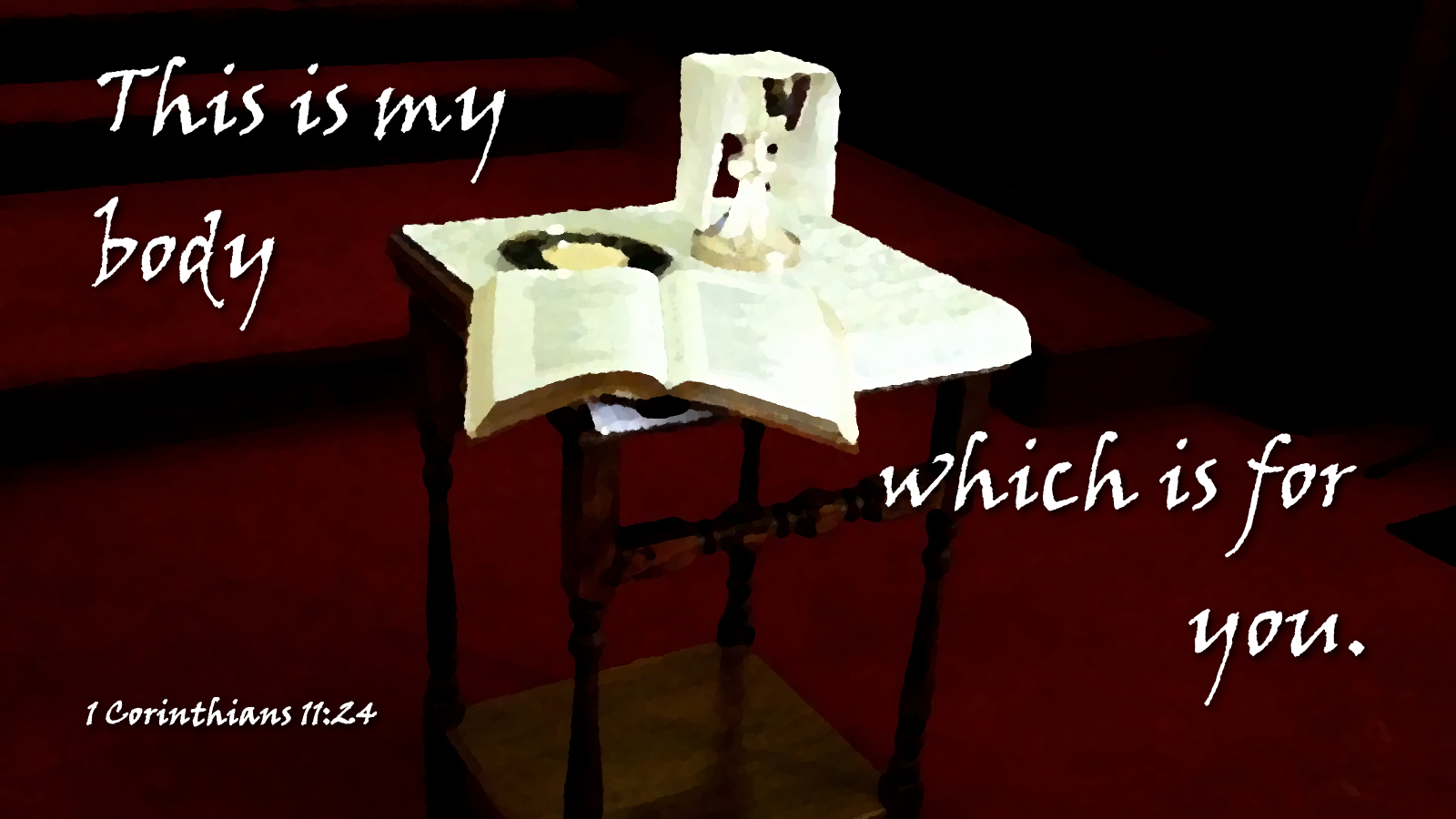
It was the first time the bread had been placed in her hands. The words she heard so many times before, having been said to others are finally said to her; “This is the body of Christ given for you.” And then the cup; “This is the blood of Christ shed for you.” The gaze of the young girl was intently focused, her eyes locked in unbreakable contact with her pastor. It was her first receiving of Holy Communion.

When God’s forgiveness touches our lives in such a way, Christ is made known. His willingness to suffer for our sake, his selfless journey to the cross assures the people of God of the depths of his love. That our Lord would offer sinners his mercy and grace is incomprehensible, at least from a human standpoint. We are not deserving of such love yet, it is ours through the death of God’s only Son.

As the Apostle Paul writes; “For as often as you eat this bread and drink the cup, you proclaim the Lord’s death until he comes.” (1 Cor. 11:26) By believing and receiving, Christians proclaim the truth and the mysteries of God, that in his desire to save people from their sin, he would offer himself up for our sake. God’s love for you is eternal; it is complete and made know most especially in this Holy Supper. Come, taste and see that the Lord is good. For, he offers himself for you.

Gracious Lord, grace our table with your presence that we may be fed with the bread of life. Amen.

Image: Holy Communion – David Nuottila, 2013

Posted in Devotions, Worship | Tagged , , , , , , | Comments Off on Given for you